
People often imagine heart attacks as a dramatic event, sudden occurrence with acute chest discomfort. But this isn’t how every heart attack happens. Some happen quietly, without any strong or clear warning indications. These heart attacks are sometimes called “silent heart attacks,” and they can be as deadly as the conventional heart attacks.
It’s crucial to know the signs of a silent heart attack because a lot of individuals don’t realize they’ve had one until a few weeks, months, or even years later. By then, the heart muscle may have already been permanently damaged. This blog talks about the signs and symptoms of silent heart attacks in women and men, as well as the risk factors included.

Serious About Your Health? We Are Too.
Partner with India's fastest-growing diagnostic network for precision testing.
What is a Silent Heart Attack?
When blood flow to the heart muscle is cut off or slowed down due to buildup of plaque, it causes damage without any obvious or severe symptoms. This is called a silent heart attack. Classic heart attacks usually produce severe chest discomfort, whereas silent heart attacks have symptoms that are less clear or obvious and are often ignored.
Routine diagnostics like an electrocardiogram (ECG), echocardiography, or stress test often reveal that someone has had a silent heart attack.
Research shows that almost one in five heart attacks happen silently without any obvious warning signs, and some groups are more likely to be at risk, such as:
- People who have diabetes
- Older adults
- Women
- People who have high cholesterol or high blood pressure
- People who smoke
- Having a family history of heart disease
- Being obese or overweight can increase the risk.
People typically delay treatment since the symptoms are minor, which raises the risk of serious problems.
A few common silent heart attack symptoms
The signs of a silent heart attack can be very different for each person. Some people have a lot of symptoms, while others can only have moderate ones or not experience any symptoms at all.
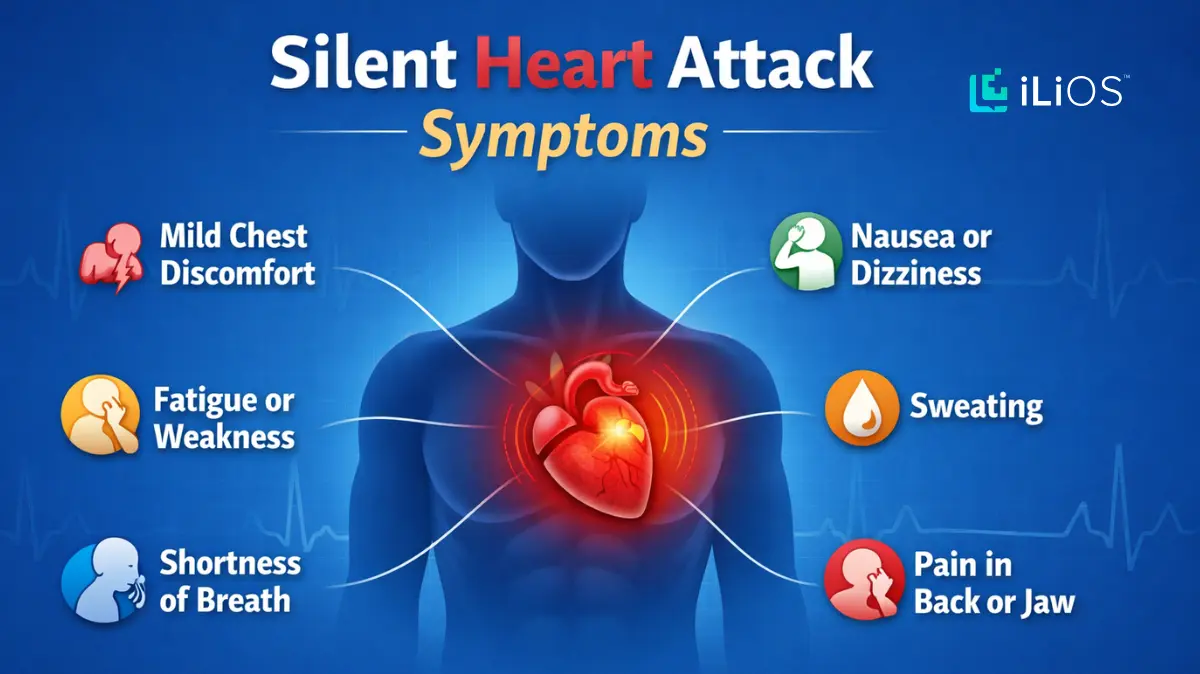
Some common signs and symptoms of a silent heart attack are:
A little bit of pressure, tightness, or discomfort in the chest |
Having trouble breathing throughout everyday tasks |
Tiredness or weakness that doesn’t feel normal |
Feeling dizzy or lightheaded |
Having cold sweats |
Feeling sick or having stomach problems such as indigestion |
You may experience aching in the jaw, arms, or upper back |
These symptoms could come on quickly or get worse over the course of several days.
How serious can a silent heart attack be?
Without any warning, silent heart attacks can permanently damage the heart muscle, which increases the risk of:
- Heart failure
- Heart rhythms that are irregular
- Sudden heart failure, or
- Chances of a major heart attack in the future
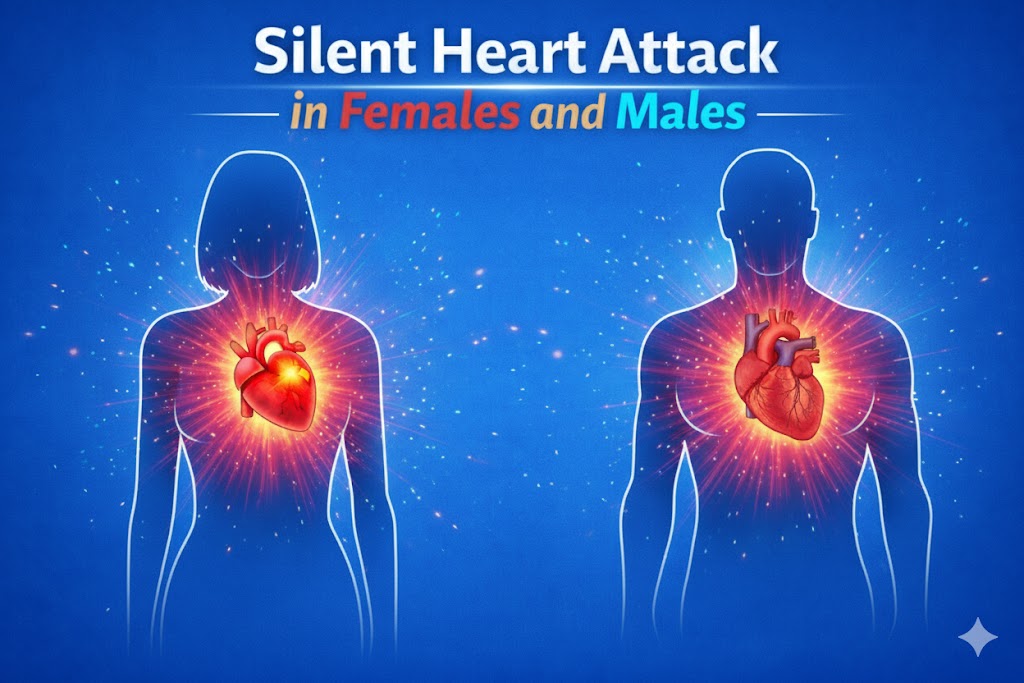
Silent Heart Attack in Females and Males
Women are more likely to have silent heart attacks, and the signs are often missed. Women are less likely to have severe chest pain. Instead, they usually have vague, generalized symptoms that could be assumed to be changes in hormones, problems with digestion, or stress.
While men have greater likelihood to experience typical heart attacks, silent heart attacks are also quite common. A lot of them have minor or intermittent symptoms and think they’re caused by stress or physical activity.
Common silent heart attack symptoms in women | Common silent heart attack symptoms in males |
Extreme or unexplained tiredness that lasts for days or weeks | Light pressure or stiffness in the chest |
Breathlessness, even when you’re not doing anything | Breathlessness while doing everyday activities |
Feeling sick, throwing up, or having an upset stomach | Sweating excessively |
Pain in the shoulders, neck, upper back, or jaw | Pain in the left arm, shoulder, or upper back |
Feeling dizzy or lightheaded and anxious | Feeling tired or weak suddenly |
The warning signs and symptoms of a silent heart attack frequently come and go, which makes it harder to figure out what’s wrong. People having silent heart attacks typically ignore their symptoms because they seem small or transitory. By recognizing these characteristics quickly, helps in early diagnosis by doctors and gets better results.
When to Get Medical Help
If you experience any of the following symptoms, please get medical help right away:
- If you notice any unexplained tiredness that won’t go away
- Any pressure or pain in the chest
- Feeling Breathless
- When there is any pain in the jaw, neck, arms, or upper back
- If there is any dizziness or weakness that comes on suddenly
Hence, knowing the signs and symptoms of a silent heart attack and early intervention can help you increase survival and recovery rates.
How can silent heart attacks be diagnosed?
Silent heart attacks are commonly found with tests like
- ECG (electrocardiogram)
- Echocardiogram
- Coronary angiography
- MRI of the heart
- CT scan
- Exercise stress testing
- By doing blood tests
Doctors can stop more damage and lower the likelihood of future problems if they detect the disease early.
What is the treatment for a silent heart attack?
The goal of treatment for a silent heart attack is to prevent more damage to the heart and lower the risk of future heart problems. Once a doctor makes a diagnosis, treatment usually involves medications like
- Aspirin (antiplatelet drug),
- Statins (to lower cholesterol),
- Beta-blockers (to lower the heart’s workload), and
- ACE inhibitors (to enhance heart function).
These prescription medicines can make the blood flow better, help in keeping the plaques stable, and protect the heart muscle.
In a few cases, especially when there are big blockages, interventional procedures such as angioplasty with stent insertion or a coronary artery bypass surgery may be required.
Serious About Your Health? We Are Too.
Partner with India's fastest-growing diagnostic network for precision testing.
How to lower your risk of having a silent heart attack
You can minimize your risk by doing things that are good for your heart, which is also like a long-term treatment for the heart.
- By eating a healthy and balanced diet.
- Try to do some exercise every day
- Keeping your weight in check
- Stop smoking
- By taking care of your stress level, blood pressure, cholesterol, and blood sugar.
- Also, always make sure to have frequent health checkups.
Conclusion
Many people don’t recognize the symptoms of silent heart attacks because they are quite mild or not what you’d expect. However, they can cause a lot of damage to the heart that lasts for a long time. It is important to recognize the silent heart attack symptoms, like feeling exhausted for no reason, having trouble breathing, and having mild chest or upper-body pain. This way, you can catch it early and avoid issues.
Both men and women may have varying types and intensities of silent heart attack symptoms. People who are at risk for heart disease should pay close attention to symptoms that last for a long time or that can’t be explained. This will help improve outcomes and lower the risk of future heart problems.
Frequently Asked Questions
Q1. Would it be possible to prevent silent heart attacks?
Yes. Managing risk factors such as high blood pressure, diabetes, high cholesterol, smoking, and being overweight, can greatly lower the risk. Regular check-ups with a doctor and quick examination of symptoms are important for prevention.
Q2. When should I go to the hospital?
If you suspect you could be having a heart attack, call your local emergency number. The best way to recieve quick care is to call an ambulance, and paramedics can start treating you and keep doing so as you go to the hospital.
Q3. What are the most typical signs and symptoms of a silent heart attack?
Some common signs of a silent heart attack are unexplained tiredness, shortness of breath, minor chest pain, dizziness, nausea, and pain in the arms, neck, back, or jaw. These signs could be short lived or confused for other health issues that are not related to the heart.
Q4. Can you fully recover from a silent heart attack?
By taking correct care, making some changes to their lifestyle, and getting regular checkups, many people can enjoy a normal and active life. Also, recovery depends on the amount of damage done to the heart and how early the problem is diagnosed.
Q5. Are silent heart attack symptoms different for men and women?
Yes. Women who have silent heart attacks often feel tired, sick, or short of breath, or have pain in their jaw or back. Men are more likely to experience pressure in their chest, pain in their arms, or sweat. And these differences can make it harder to figure out what is wrong.