
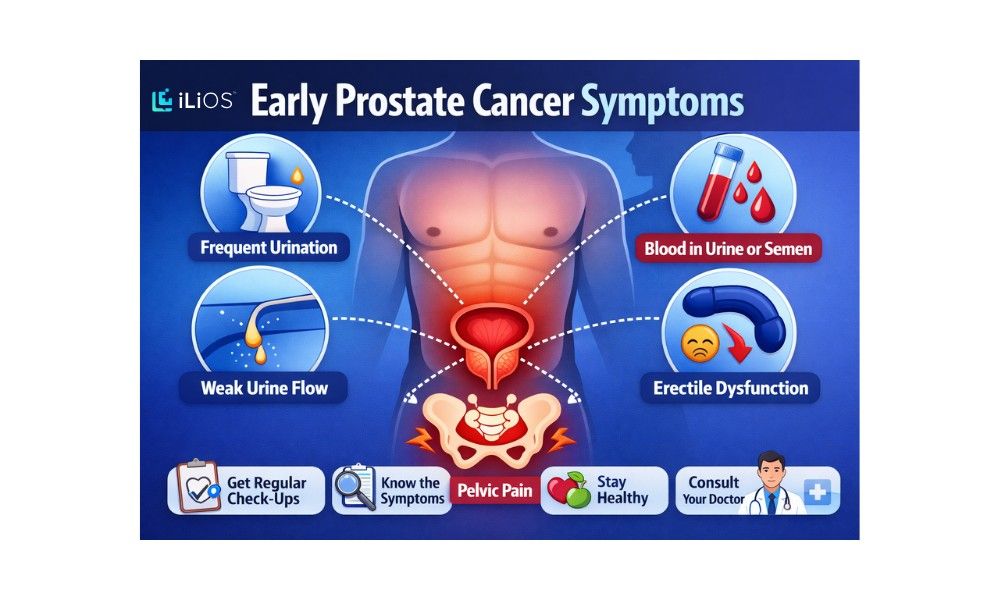

Early Prostate cancer often develops silently, which is the reason why many men don’t notice warning signs until the condition has progressed. In the early stages, Prostate cancer symptoms can be mild, intermittent or easily mistaken for common urinary issues linked to ageing. However, identifying subtle changes such as frequent urination, difficulty starting or stopping the urine flow, or a weak stream can make a huge difference in early detection and successful treatment.
Determining the early symptoms of Prostate cancer empowers men to look for timely medical advice and screening. While not every urinary change indicates cancer, persistent symptoms should not be ignored. Regular check-ups, awareness of risk factors such as family history, age and proactive screening plays a crucial role in recognising prostate cancer signs and symptoms at a stage when it is most treatable, and outcomes are significantly better.

Serious About Your Health? We Are Too.
Partner with India's fastest-growing diagnostic network for precision testing.
Understanding Prostate Cancer
Prostate cancer arises from the prostate gland (a small walnut-sized gland in the male reproductive system responsible for the production of seminal fluid).This disease is classified into stages based on how far cancer has grown or spread, by using the TNM system and stage grouping from 1 to 4.
Stage I (Early-Stage, Localized Prostate Cancer)
During Stage 1, the prostate cancer is small and remains inside the prostate gland. The growth is slow, and it does not cause any symptoms.At this stage, the tumour is detected incidentally during routine screening tests such as a PSA (Prostate-Specific Antigen) blood test or a digital rectal exam. Common stage 1 prostate cancer symptoms include that some men may notice mild urinary issues, such as frequent urination or difficulty starting urination.
Stage II (Localized but More Advanced Within the Prostate)
In Stage 2, the cancer is still in the prostate gland but is larger or in more than one area of the gland. The cancer grows faster than in Stage 1. Even though the cancer can still be cured, medical attention is needed to prevent the growth of the cancer. Some of the stage 2 prostate cancer symptoms include the sudden need to urinate, the inability to empty the bladder, weak flow of urine, or blood in the urine or semen.
Stage III (Locally Advanced Prostate Cancer)
In stage 3, the cancer has already reached the surrounding tissues, including the seminal vesicles, but has not yet reached the distant areas of the body. The cancer cells in this stage are more aggressive and need to be treated with various methods of treatment, such as radiation, surgery, or hormone therapy. Symptoms of prostate cancer in men in this stage include more serious urinary symptoms, pelvic pain, impotence, and possibly bloody semen.
Stage IV (Advanced or Metastatic Prostate Cancer)
In Stage 4, the prostate cancer has already spread to distant parts of the body, including the lymph nodes, lungs, bones, or liver. The stage 4 prostate cancer symptoms include bone pain, particularly in the lower back, hips, or ribs, fatigue, unintentional weight loss, and difficulty urinating.
What are the Symptoms of Prostate Cancer?
1. Difficulty Starting or Stopping Urination
One of the most common early prostate cancer symptoms includes trouble beginning or stopping the flow of urine. The prostate gland normally surrounds the urethra, and when it enlarges due to cancer, it may press against the tube and slow the flow of urine.
A man may have the sensation of needing to urinate but be unable to start the flow of urine or may experience dribbling after urination. These early signs of prostate cancer symptoms can also occur in benign conditions, but persistent difficulty should be assessed by a doctor.
2. Weak or Interrupted Urine Flow
A weak urine flow or one that stops and starts several times may indicate that the urethra is being pressed by the enlarged prostate. This symptom is usually described by men as a weaker force of flow compared to what is normal. Although it is often associated with benign prostatic hyperplasia, prostate cancer may also cause similar changes in urine flow.
3. Frequent Urination, Especially at Night (Nocturia)
Urinary frequency, particularly at night, may be experienced by men with prostate cancer. This is because the bladder is not able to empty properly because of the obstruction caused by the cancer in the urethra. Repeated nighttime trips to the bathroom can be one of the early symptoms of prostate cancer, which disrupts sleep and causes fatigue. If frequent urination persists without another clear cause, medical evaluation is recommended.
4. Pain or Burning Sensation During Urination
A burning feeling or discomfort while urinating may occur if prostate cancer causes irritation or inflammation in the surrounding tissues. The most common reason for urinary tract infections, which occur as the primary cause, needs to be considered along with cases of pain that lack any infection. The medical field needs to conduct extra examinations because continuous pain requires testing to identify potential hidden prostate conditions.
5. Blood in Urine (Hematuria)
The presence of blood in the urine may be seen as pink, brown, or red spots. These prostate cancer signs and symptoms are caused by the cancerous tissues damaging the blood vessels in or around the prostate gland. Even a small amount of blood should be taken seriously and assessed promptly. While other conditions can cause hematuria, which may indicate advanced prostate disease.
6. Blood in Semen
Blood in the semen is a less common symptoms of prostate cancer. It may be noticed as reddish or brownish spots during ejaculation. This symptom of prostate cancer can result from inflammation, infection, or injury, but in some instances, it may also be associated with prostate cancer.
7. Erectile Dysfunction
Prostate cancer can interfere with nerves of blood vessels responsible for erection. Men may experience trouble getting or keeping an erection. While erectile dysfunction has many possible causes, like age and cardiovascular issues, a sudden or unexplained onset may need medical evaluation to rule out prostate-related conditions.
8. Hip, Pelvic, or Lower Back Discomfort
In the advanced phase, the prostate cancer could potentially reach the adjacent bones, like the pelvis or hips. This can result in pain in the bones that persists even when the person rests. Bone pain from cancer is constant and tends to worsen at night. These early signs of prostate cancer symptoms that need urgent medical attention.
9. Loss of Bladder or Bowel Control
If the prostate cancer has reached the spine (or is putting pressure on spinal nerves), this may interfere with the body’s signals related to bowel and bladder control. Prostate cancer symptoms in this manner would be considered a medical emergency.
10. Swelling in the Legs or Feet
In the advanced stages, the cancer might spread to the lymph nodes in the surrounding regions, thus preventing the flow of fluids. The swelling may be painless initially, but it may become uncomfortable with time. Persistent or unexplained swelling can be considered as aggressive prostate cancer symptoms, as it needs prompt medical consultation or a cancer second opinion if you aren’t sure of the right diagnosis.
Diagnosis & Treatment: Prostate Cancer
- PSA Blood Test: This test determines the level of prostate-specific antigen. High levels of PSA may suggest cancer or any other prostate problem.
- Digital Rectal Examination (DRE): In order to examine for lumps or other abnormalities in the prostate.
- Magnetic Resonance Imaging (MRI): To create 3-D images of the body to help identify those areas that could possibly be at risk for prostate cancer.
- Biopsy: Here the doctor obtains tissue samples from the prostate using ultrasound or MRI imaging, in order to determine if cancer exists.
- Gleason Score: It is used to classify the grade (how aggressive) of the cancer cells in the prostate.
- Staging Tests: (CT scan/bone scan) are used to determine how far prostate cancer has spread in the body.
Treatment Options
- Active surveillance: It includes observing the patient who has a slow growing or early stage prostate cancer.
- Surgery: It is a procedure usually performed to treat patients suffering from an enlarged prostate and/or urinary problems resulting from the aforementioned disease.
- Radiation Therapy: Treatment with radiation uses high-energy rays to attack cancer cells.
- Hormone Therapy (Androgen Deprivation Therapy): Minimises testosterone to slow cancer growth.
- Chemotherapy: Leveraged mainly in the advanced or metastatic stages.
- Targeted Therapy / Immunotherapy: Focused on specific cancer cells or to boost the immune response amid treatment.
Serious About Your Health? We Are Too.
Partner with India's fastest-growing diagnostic network for precision testing.
Conclusion
Prostate cancer is a silent disease, and the body provides subtle cues that are not recognized until the progression of the disease is advanced. Recognizing the early opportunities presented by urination problems, pelvic pain, or inexplicable weakness can be a huge turning point in diagnosis and treatment.
Staying informed about prostate cancer symptoms empowers men to seek medical advice at the right time, which improves survival rates. If you or your loved ones observe unusual signs, then don’t delay, reach out to the Ilios Health team for expert guidance and compassionate care.
FAQs
1. Is prostate cancer painful in the early stages?
Most early-stage prostate cancers are painless and may not cause noticeable discomfort.
2. Are there female prostate cancer symptoms?
Because women do not have prostate glands, they cannot develop prostate cancer.
3. What age should men get screened for prostate cancer?
Men should talk to their doctor about prostate cancer screening at age 50, or younger if there are any risk factors.