

Every year, heart attacks strike hundreds of thousands of people, often without warning. In the United States alone, about 805,000 people suffer a heart attack annually, and roughly 605,000 of these are first-time heart attacks. The crucial question is: can a heart attack be prevented if you spot the signs early and get proper care? In many cases, the answer is yes.
Research shows that a significant number of patients experience certain symptoms in the weeks leading up to a heart attack—what doctors call prodromal or pre-heart attack symptoms. Recognizing these early warning signs of a heart attack and acting on them could potentially save your life by allowing time for medical intervention.
These early symptoms are often mild or intermittent, making them easy to ignore. In fact, nearly half of people may not recognize or act on these warning signs. However, being vigilant about any unusual physical sensations can prompt you to seek treatment before a looming heart attack strikes. Below are six key signs of a heart attack up to a month before it happens (in both men and women) that you should never ignore.

Serious About Your Health? We Are Too.
Partner with India's fastest-growing diagnostic network for precision testing.
6 Early Signs of a Heart Attack a Month Before
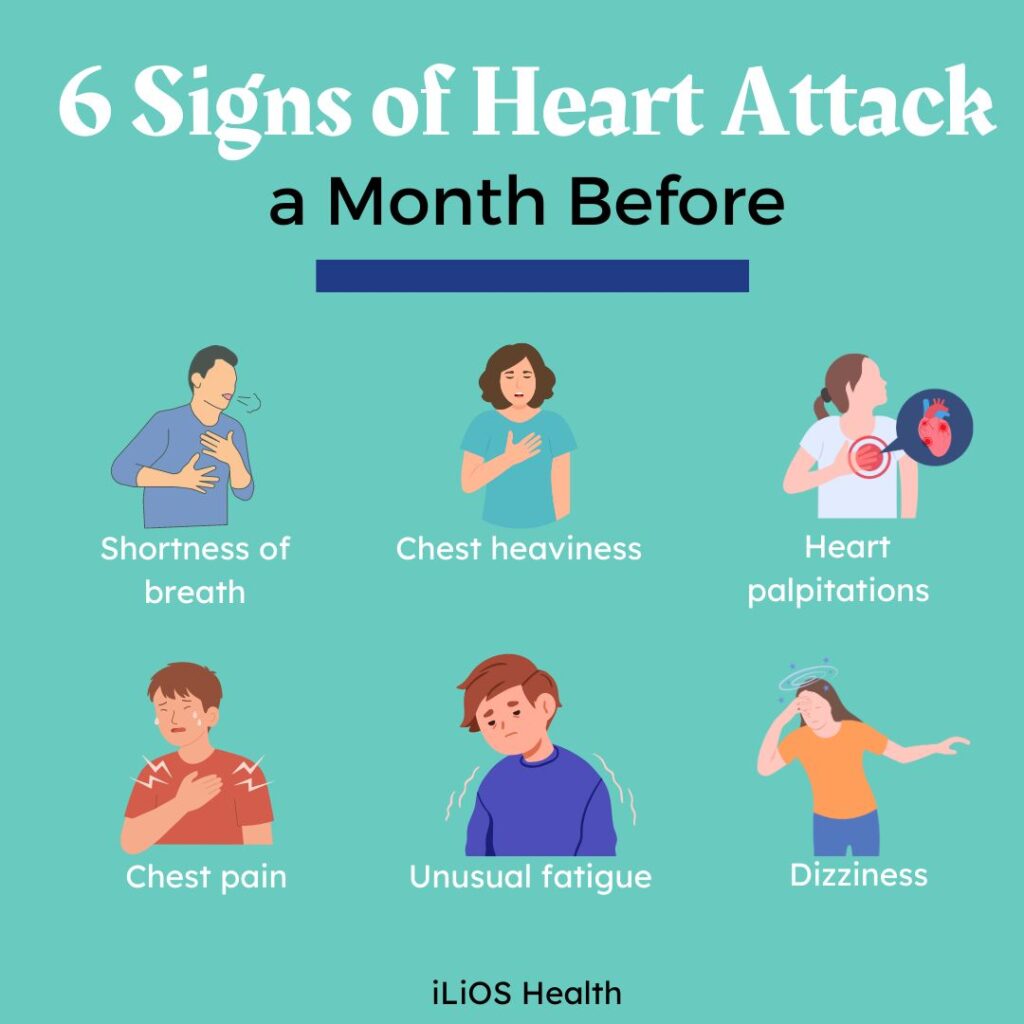
Prodromal symptoms (early pre-heart-attack symptoms) are subtle red flags your heart may send out days or weeks in advance. They can be as mild as a bit of shortness of breath, which is why many people dismiss them until it’s too late.
The most common prodromal symptoms are:
- Shortness of breath
- Chest heaviness or pressure
- Heart palpitations (skipped or rapid heartbeats)
- Chest pain (angina episodes)
- Unusual fatigue (extreme tiredness)
- Dizziness or lightheadedness
1. Shortness of Breath
Shortness of breath (known as dyspnea) is often one of the earliest signs of heart trouble. If you find yourself winded by activities that used to be easy—such as climbing stairs or a light walk—pay attention.
Feeling more out of breath than others your age during exertion could be an alarm signal from your heart. This breathing difficulty may come on with or without chest pain. It can feel like you can’t catch your breath or get enough air, even at rest. Don’t chalk it up to “just getting older” if it’s getting worse or new for you. Unexplained shortness of breath is a red flag to get your heart checked.
2. Chest Heaviness or Pressure
Many heart attack survivors recall a feeling of pressure, tightness, or heaviness in the chest in the weeks before the attack. About 44% of people who had early symptoms reported episodes of chest heaviness, often triggered by exertion.
This kind of discomfort is basically angina—your heart’s way of signaling that it’s not getting enough blood and oxygen. It might feel like someone is sitting on your chest or like a band tightening around it. If you experience recurrent chest heaviness or discomfort (even if it’s not outright pain), take it seriously. Monitor how often it happens and whether it’s brought on by activity or stress, and inform your doctor. Chest pressure that comes and goes is one of the classic warning signs of a heart attack.
3. Heart Palpitations
Heart palpitations are the sensation that your heart is racing, pounding, or skipping beats. You might feel a flutter in your chest or that your heart “just skipped a beat.”
About 42% of people with prodromal symptoms experienced heart palpitations before their heart attacks. These can occur when the heart is pumping too hard or too fast—sometimes due to stress, exertion, or even caffeine.
While palpitations can have benign causes like anxiety or dehydration, they can also indicate an underlying cardiac issue such as arrhythmia or reduced heart function. For some individuals, palpitations might be the only noticeable sign of a silent heart attack. If you frequently feel your heart racing or flip-flopping for no good reason, especially if it’s accompanied by dizziness or discomfort, get it checked out.
4. Chest Pain or Discomfort
Chest pain is the hallmark warning sign of an impending heart attack. This pain is often felt in the center or left side of the chest and may radiate to the arm or jaw. It might feel like a crushing pain, squeezing, burning, or intense pressure.
Chest pain is the most common early symptom—experienced by 68% of people in the month before their heart attack. It might come and go—one day you feel an ache or burning that fades, only for it to return later. Many people mistake brief or mild chest pains for indigestion or muscle strain.
However, recurring chest pain is your heart’s distress signal. Never ignore chest pain that is unexplained, even if it’s not severe. If it lasts more than a few minutes or repeatedly flares up, treat it as a serious warning sign and seek medical evaluation.
5. Unusual or Extreme Fatigue
We all get tired, but unusual fatigue refers to an extreme tiredness that is out of proportion to your activity level. This can occur weeks before a heart attack—especially in women.
One study found that 70% of women experienced unexplained fatigue in the month before their heart attack. This kind of tiredness doesn’t go away with rest. You might wake up after a full night’s sleep exhausted, or feel wiped out doing simple tasks.
Men can experience this too, but it’s more frequently reported by women. If you notice severe fatigue or weakness despite good sleep and no clear cause, it could be your heart struggling to circulate blood—especially if it’s paired with other symptoms like chest heaviness or breathlessness.
6. Dizziness or Lightheadedness
Feeling dizzy, faint, or light-headed for no reason can be related to your heart. Dizziness occurs when blood flow to the brain is reduced, possibly due to a sudden drop in blood pressure or a weak heartbeat caused by narrowed arteries.
You might feel like the room is spinning or like you could pass out—especially when you stand up or exert yourself. While occasional dizziness can happen from dehydration or standing too quickly, frequent episodes or those combined with chest discomfort need attention. Dizziness may be your brain saying it’s not getting enough oxygenated blood. Don’t ignore it—get your heart checked.
Don't Wait for Symptoms - Prevent Them
Early detection saves lives. Book comprehensive health screenings and
online consultations today.
✓ Full Body Checkup Packages
✓ Specialist Doctor Consultations
✓ Results Reviewed by Experts
Differences in Heart Attack Risks and Symptoms Between Women and Men
Heart attacks affect both men and women, but there are some key differences in risks and how symptoms appear:
• Prevalence
Men tend to have heart attacks at younger ages. About 70% of sudden cardiac events occur in men. On average, men experience their first heart attack in their mid-60s, while women have their first in their early 70s.
Still, heart disease is the number one killer of women globally. After menopause, the risk in women rises sharply. Alarming trends also show rising heart attack rates in younger women.
• Prodromal (Early) Symptoms
Women are more likely than men to experience prodromal symptoms. One study found that 85% of women reported early symptoms, compared to 72% of men.
Women often experience broader early signs—such as unusual fatigue, jaw pain, sleep disturbances, or anxiety. Men may more frequently report the classic chest pressure with exertion. However, chest pain is still a core symptom in both sexes.
• “Atypical” Symptoms in Women
Women are more likely to have atypical or silent heart attack symptoms like:
- Nausea or vomiting
- Pain in the jaw, neck, or back
- Indigestion or heartburn-like sensations
- Breathlessness without chest pain
- Anxiety or panic-like feelings
Because these don’t sound like typical heart attack signs, women often misinterpret them as unrelated health issues—leading to delays in care.
• Outcomes
Women often have worse outcomes after a heart attack. About 38% of women die within a year of a first heart attack, compared to 25% of men.
This may be due to delays in seeking care, older age at onset, more comorbidities, or under-recognition of symptoms. Women are also less likely to receive aggressive treatments like stents or certain medications. That’s why early awareness and action are especially important for women.
Parting Thoughts
A heart attack is not always a sudden event. Your body often gives warnings—sometimes a month ahead. By noticing and acting on these early heart attack symptoms, you could prevent a serious event or limit its severity.
If you notice symptoms like chest heaviness, fatigue, palpitations, shortness of breath, or dizziness, don’t brush them off. Book an appointment with a doctor or cardiologist. Early testing and treatment—like medications, lifestyle changes, or artery-clearing procedures—can save your life.
Even without symptoms, schedule regular heart screenings after age 50 or earlier if you have high-risk factors.
Frequently Asked Questions
Q. What are the common early warning signs of a heart attack?
Common early warning signs include:
Chest discomfort or pressure
Shortness of breath
Pain in arms, jaw, back, or shoulders
Extreme fatigue or weakness
Lightheadedness or dizziness
Cold sweats
Nausea or stomach discomfort
Anxiety or sense of doom
Trouble sleeping
Some people experience just one or two symptoms. Even subtle changes should be taken seriously—especially if you have risk factors like diabetes or high cholesterol.
Q. How can recognizing early signs of a heart attack save lives?
Identifying signs of heart attack a month before allows doctors to intervene early—before permanent heart damage occurs. You might receive medications, dietary guidance, or even procedures to restore blood flow.
Catching symptoms early greatly reduces the risk of death and long-term heart damage. It gives you a critical window to act, get evaluated, and stay safe.
Q. What are the 6 signs before you have a heart attack?
The 7 most reported signs of an impending heart attack are:
Chest pressure or discomfort
Shortness of breath
Unusual fatigue
Dizziness or fainting
Heart palpitations
Pain radiating to the arms, jaw, or back
These signs may occur a few days to a month before the actual heart attack.
Q. What are the four silent signs of a heart attack?
Silent heart attack symptoms are easy to miss and may not include obvious chest pain. Common silent signs include:
Unexplained fatigue
Shortness of breath
Indigestion or discomfort in the upper abdomen
Mild chest pressure or heaviness that comes and goes
These symptoms often go unrecognized but can be just as dangerous.
Q. How to reduce heart attack risk?
To lower your heart attack risk:
Eat a heart-healthy diet (low in saturated fats and sodium)
Stay physically active
Quit smoking
Maintain healthy blood pressure, cholesterol, and blood sugar
Manage stress
Get regular checkups, especially if you have a family history of heart disease
Preventive care and lifestyle choices play a major role in heart health.
Q. How do I know if I am on the verge of a heart attack?
You may be on the verge of a heart attack if you’re experiencing:
Persistent chest pressure or pain
Severe shortness of breath
Sudden, unexplained fatigue or weakness
A sense of anxiety or dread
Nausea, sweating, or lightheadedness
If these symptoms intensify or occur together, seek emergency medical help immediately.